Choosing Art and Mirrors That Make a Room Feel Finished
Walls are the final layer of a room. A few well-chosen, well-placed pieces do more than a gallery wall of many.
A room without anything on the walls can feel unfinished, while one with too much can feel busy. The balance lies in choosing fewer, larger and better pieces, and in hanging them well.
Think in scale
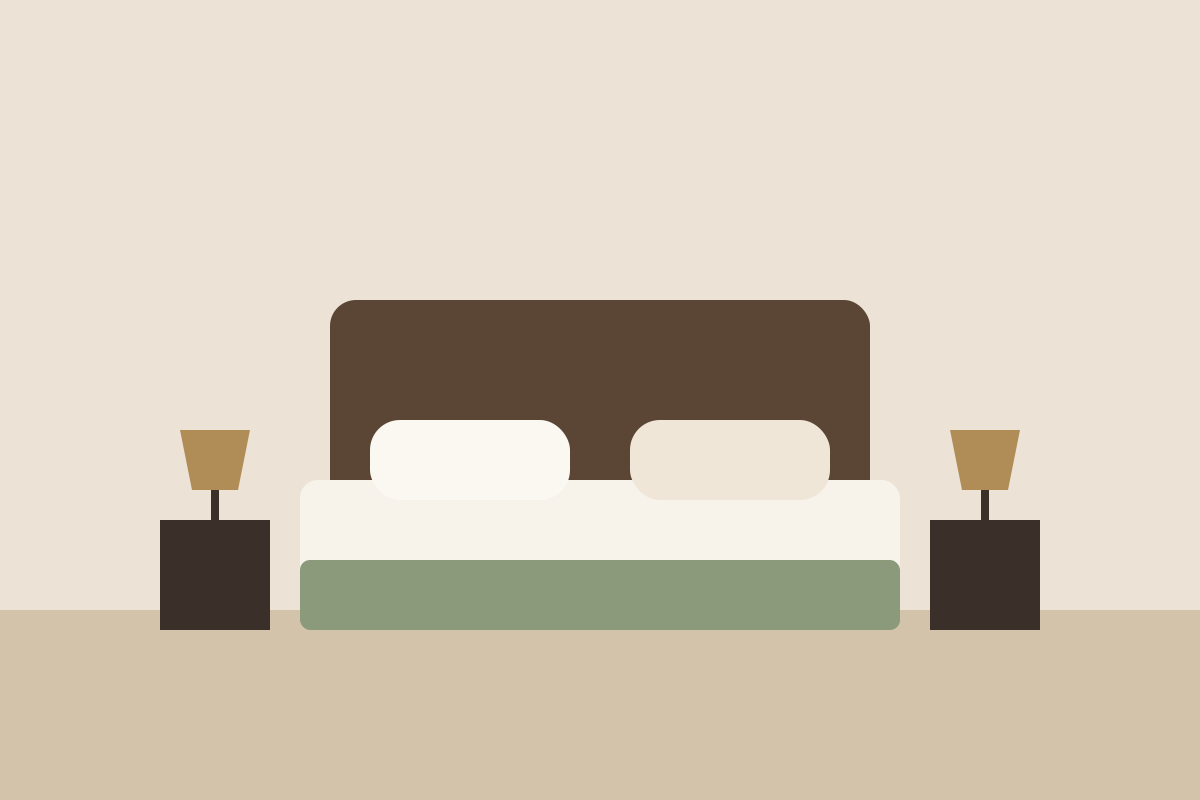
Most people choose art that is too small. A useful guide is that artwork above a sofa or bed should be around two thirds of the width of the furniture beneath it. A single large piece often looks more confident than several small ones.
Hang at the right height
The centre of a piece should sit at roughly 145 to 150 centimetres from the floor, which is average eye level. When hanging above furniture, leave a gap of 15 to 25 centimetres between the top of the furniture and the bottom of the frame.
Hanging, step by step
- Trace each frame onto paper or kraft card, cut out the shapes and tape them to the wall.
- Move the paper templates until the spacing and height look right from across the room as well as up close.
- Mark the hanging point on each template by measuring from the top of the frame to the taut wire or hook.
- Choose fixings suited to the weight of the piece and the type of wall, and check for cables and pipes before drilling.
- Hang each piece, remove the paper and check that it is level.
Arranging a group
If you do want several pieces together, treat the group as one large object. Keep the gaps between frames consistent, usually 5 to 8 centimetres, and align either the centre line or one outer edge so the arrangement has a clear structure. Lay the pieces out on the floor first and photograph the options before anything goes on the wall.
Use mirrors for light and depth
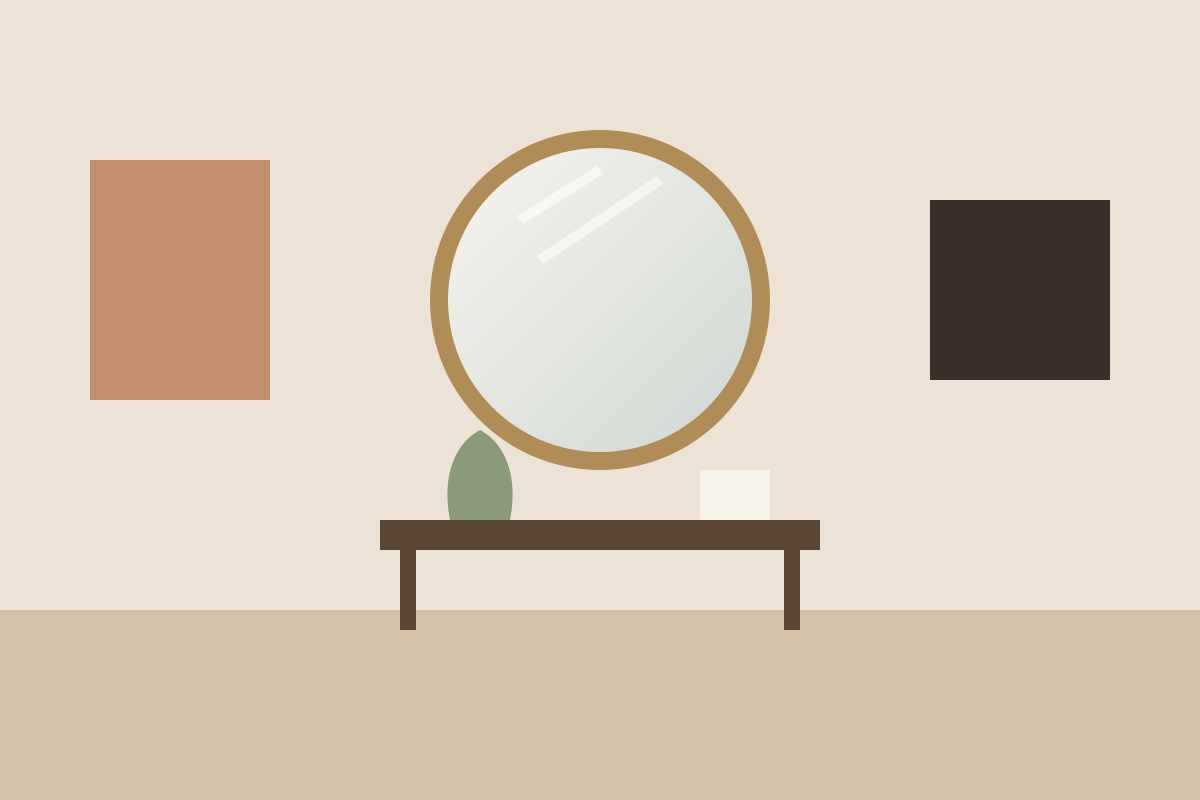
A mirror can double the feeling of light in a room if it is placed opposite or beside a window. Choose a simple frame or a frameless shape so it reads as an object rather than a decoration. Round and arched mirrors soften rooms full of straight lines.
Before hanging a mirror, look at what it will reflect. A mirror facing a window, a plant or a favourite piece of furniture adds light and interest; one facing a cluttered corner or a television doubles what you would rather not see. Large mirrors are heavy, so use fixings rated for the weight, and secure the top of a floor-standing mirror to the wall.
Choose with restraint
- Pick a limited range of colours that already appear in the room.
- Mix media, such as one painting, one print and one sculptural object.
- Frame carefully: good framing and mounts make modest art look considered.
Protecting what you hang
Keep works on paper out of direct sunlight, which can fade inks and paper over time, and avoid hanging them above radiators or in steamy bathrooms. When framing something you value, ask for acid-free mounts and UV-filtering glazing.
Art does not have to be expensive
Original prints from local artists, vintage posters and your own photography can all work well when framed properly. Choose what you love, and the room will reflect it.