Layered Lighting: The Three Levels Every Room Needs
Rooms look better and feel better when light comes from more than one place. Here is a simple framework.
A single ceiling light can illuminate a room, but it rarely makes it beautiful. Designers talk about layered lighting: combining several sources at different heights and with different jobs. Once you know the three layers, planning any room becomes straightforward.
Ambient light
Ambient light is the general, overall glow. It can come from ceiling fixtures, wall lights or a pendant. It should be soft and dimmable rather than harsh. Aim for warm white, around 2,700 kelvin, in living areas and bedrooms.
Task light
Task lighting helps you do something specific: reading, cooking, applying make-up or working at a desk. It should be brighter and more focused than ambient light, and placed so that it does not cast your own shadow on the work.
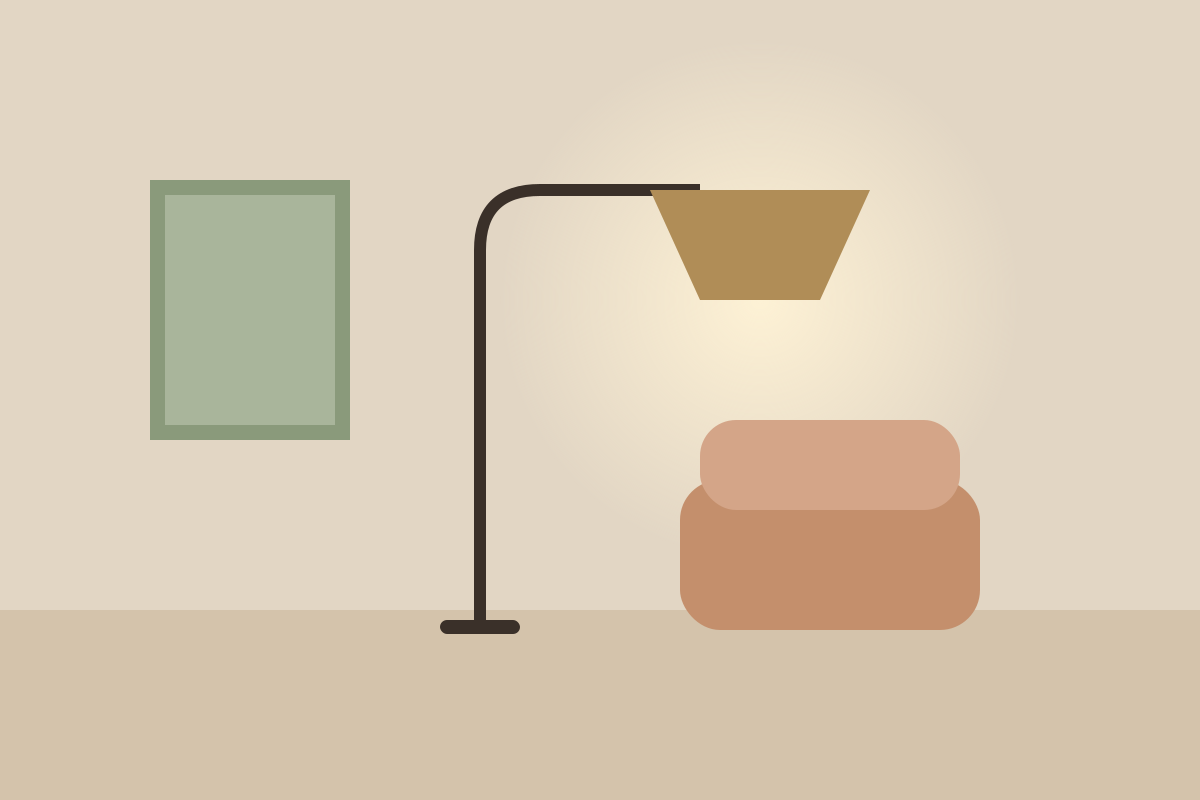
- Reading: a floor lamp beside the chair or a wall light on a swing arm.
- Kitchen: under-cabinet strips or spots over the worktop.
- Desk: an adjustable lamp on the side opposite your writing hand.
Accent light
Accent light adds drama and depth. It highlights art, a textured wall, a plant or a shelf. A small adjustable spot or picture light is often enough. This layer is what makes a room feel designed rather than just lit.
Putting it together
In a living room, you might combine a dimmable ceiling or wall layer, two lamps at seating height and one accent on a favourite object. In the evening, you can turn off the ceiling and live by lamp light alone.
Planning a room step by step
A lighting plan does not need to be complicated. Working through the room in a set order helps you avoid both dark corners and overlit ceilings.
- List what happens in the room: reading, eating, working, watching television, relaxing.
- Mark where each activity takes place and note the existing sockets, switches and ceiling points.
- Add task light to every activity zone first, because it is the layer most often forgotten.
- Add ambient light to fill the space softly, ideally from more than one source.
- Finish with one or two accents on the features you most want to see in the evening.
- Decide which lights should be controlled together and put them on separate switches or dimmers.
Common mistakes
- Relying on a grid of ceiling downlights as the only source of light.
- Mixing warm and cool bulbs in one room, which makes colours look uneven.
- Placing lamps where the bare bulb is visible at eye level, causing glare.
- Hanging a pendant too high above a dining table, so the light spreads out instead of gathering people together.
- Thinking about switches only at the end, when the wiring is already fixed.
Layering light without rewiring
Renters, and anyone not planning building work, can still layer light well. Plug-in wall lights with a neat fabric cable, rechargeable table lamps and smart bulbs that dim from a switch or phone all add flexibility without new wiring. For any change to fixed wiring, use a qualified electrician.
A few technical notes
- Choose bulbs with a high colour rendering index, 90 or above, so that colours look natural.
- Use dimmers wherever you can.
- Keep colour temperature consistent within one room.